

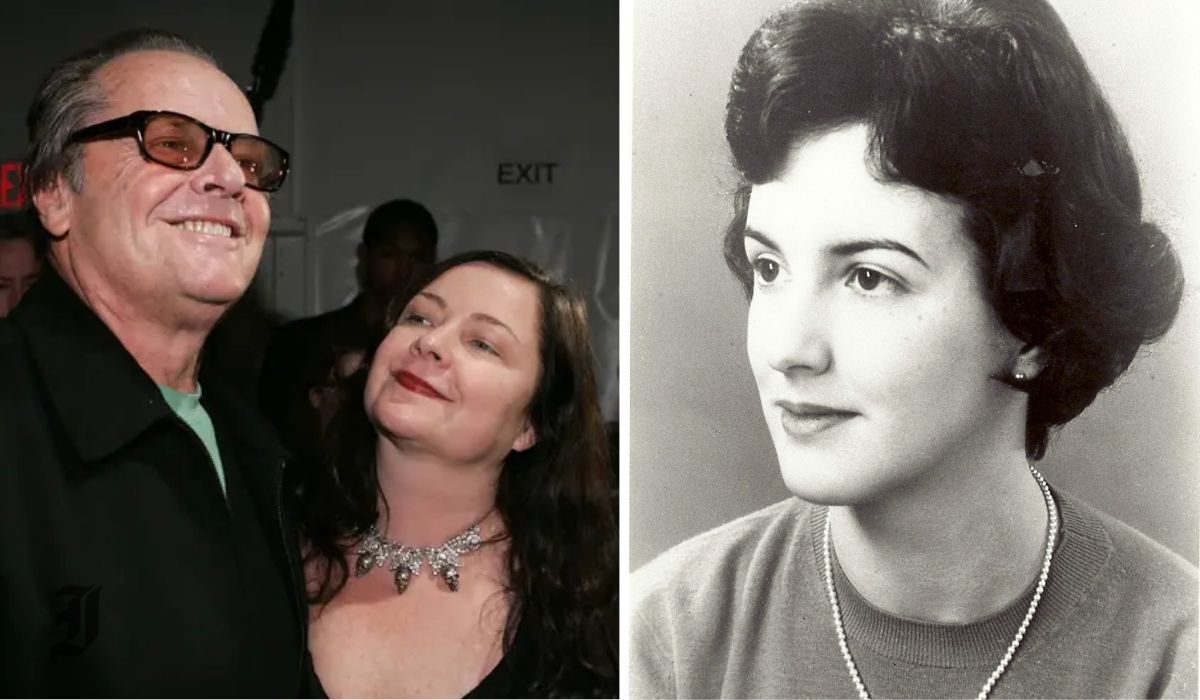
The story of June Frances Nicholson remains one of the most fascinating and unexpected chapters in Hollywood history. While millions of movie fans know Jack Nicholson as one of the most celebrated actors of all time, far fewer are familiar with the remarkable family story that shaped his early life. For decades, Jack believed that the woman he called his sister was actually his biological mother. That woman was June Frances Nicholson, a young performer with dreams of a career in entertainment whose life became intertwined with one of Hollywood’s most surprising family revelations.
The truth about Jack Nicholson’s parentage did not become public until 1974, when research conducted for a TIME magazine profile uncovered a closely guarded family secret. By that time, both June and the woman who raised Jack had already passed away. As a result, much of June’s story has been reconstructed through family records, biographical accounts, and historical sources. Although her public profile was limited, her role in one of Hollywood’s most discussed family histories continues to attract interest today.
Quick Bio Table: June Frances Nicholson
| Detail | Information |
|---|---|
| Full Name | June Frances Nicholson |
| Stage Name | June Nilson |
| Known For | Biological mother of Jack Nicholson |
| Birth Date | November 5, 1918 (according to genealogy records) |
| Birthplace | Pittsfield, Massachusetts |
| Death Date | July 31, 1963 |
| Age at Death | 44 |
| Profession | Showgirl and aspiring actress |
| Parents | John Joseph Nicholson and Ethel May Rhoads Nicholson |
| Child | Jack Nicholson |
| Spouse Linked in Records | Donald Furcillo (Donald Rose) |
| Family Significance | Central figure in the Jack Nicholson family secret |
Who Was June Frances Nicholson?
June Frances Nicholson was a young woman whose life reflected both the opportunities and social challenges of America during the 1930s and 1940s. According to genealogy records, she was born in Pittsfield, Massachusetts, in 1918 and later became associated with the entertainment industry under the stage name June Nilson. While she never achieved major fame as an actress, she pursued opportunities as a showgirl and performer at a time when many young women were drawn to the excitement of show business.
Most public interest in her life stems from her connection to Jack Nicholson. Yet reducing her story solely to that relationship overlooks an important reality. June was an ambitious young woman who sought independence and a career in entertainment while navigating the social expectations of her era. The limited records available suggest that she spent portions of her adult life pursuing opportunities beyond her hometown, eventually becoming part of a family story that would later capture public attention.
June’s Family Background and Early Life

June grew up in a family headed by John Joseph Nicholson and Ethel May Rhoads Nicholson. Biographical sources describe John as a department store window dresser, while Ethel May worked as a hairdresser and was also known for her artistic interests, including oil painting. Their household would later become the setting for one of the most unusual parent-child arrangements in celebrity history.
The family appeared outwardly conventional, but circumstances changed dramatically when June became pregnant as a teenager. During the 1930s, unmarried pregnancies often carried significant social stigma in many American communities. Families frequently sought ways to protect young women from public scrutiny, and in some cases, complex arrangements were created to shield both mother and child from judgment. The Nicholson family ultimately chose such a path, setting the stage for decades of secrecy.
The Birth of Jack Nicholson and a Hidden Truth
Jack Nicholson was born on April 22, 1937, in Neptune, New Jersey. Public accounts generally agree that June was very young at the time of his birth, with sources placing her at approximately 17 or 18 years old. The circumstances surrounding the pregnancy were complicated, and uncertainty existed regarding the identity of Jack’s biological father.
Rather than raising Jack openly as her son, June’s parents stepped into parental roles. Ethel May Nicholson and John Joseph Nicholson raised the child as if he were their own son, while June was presented to him as his older sister. This arrangement remained intact throughout Jack’s childhood and adolescence. For years, he accepted the family structure exactly as it had been presented, never suspecting that the woman he called sister was actually his mother.
Why Jack Nicholson Believed June Was His Sister
Understanding the Family Secret
The decision to conceal Jack’s true parentage reflected the social realities of the time rather than a desire for personal deception alone. In the late 1930s, family reputation carried enormous weight, particularly for young women attempting to establish careers. Protecting June from the consequences of public judgment may have been a major factor behind the arrangement.
Several important elements contributed to the secret’s longevity:
- June was introduced to Jack as his older sister from the beginning.
- Ethel May and John Joseph consistently filled parental roles.
- Other family members maintained the same narrative.
- Social attitudes during the era encouraged discretion regarding unmarried motherhood.
- The arrangement became normalized within the family over time.
Because the story remained consistent throughout his upbringing, Jack had little reason to question it. What began as a protective measure eventually became a deeply rooted family reality.
June Nilson and Her Show Business Aspirations
Beyond her family story, June pursued opportunities in entertainment under the stage name June Nilson. Reports indicate that she worked as a showgirl and sought a future in the performing arts. While documentation of her career remains limited, sources connected to Jack Nicholson’s biography describe her involvement in show-business circles during the 1940s.
A TIME magazine profile later referenced June leaving home when Jack was around four years old to work as an Earl Carroll showgirl in Miami. Such opportunities were highly sought after during the era, offering ambitious performers a chance to enter the entertainment world. Although she did not become a major Hollywood star, her efforts reflected a determination to build a life beyond the constraints she may have faced as a young mother.
Moving West and Influencing Jack’s Future
June’s connection to California indirectly influenced one of Hollywood’s greatest acting careers. After spending time pursuing opportunities in entertainment, she eventually lived in Los Angeles. In 1954, Jack traveled to California after finishing school and spent time there with her. That move would prove life-changing.
Los Angeles exposed Jack to the film industry and opened doors that eventually led to his first jobs around Hollywood. His early work at MGM and later success as an actor can be traced, in part, to his decision to relocate west. While June is rarely credited as a direct force behind his career, her presence in California helped create circumstances that introduced him to the entertainment world. In this way, her influence extended beyond family ties and into the foundation of his professional journey.
The 1974 Revelation That Changed Everything
TIME Magazine Discovers the Truth
One of the most remarkable moments in celebrity biography occurred in 1974. Researchers preparing a profile on Jack Nicholson for TIME magazine uncovered evidence indicating that June Frances Nicholson was not his sister but his biological mother. Further investigation confirmed that the people he believed were his parents were actually his grandparents.
The discovery was especially significant because both June and Ethel May had already passed away. June had died of cancer in 1963 at the age of 44, while Ethel May had also died before the revelation became public. As a result, Jack could not directly discuss the family’s decision with the two women most responsible for it. Accounts from the period indicate that Lorraine Nicholson, whom Jack had believed to be his sister but who was actually his aunt, helped confirm the story after the magazine’s findings emerged.
How Jack Nicholson Reacted to the Family Secret
Many observers expected the revelation to have a devastating emotional impact, yet Jack Nicholson’s public response was measured and thoughtful. He later explained that discovering the truth was dramatic but not psychologically damaging. By the time he learned the facts, he was already a mature adult with an established identity and successful career.
Jack suggested that the information clarified aspects of his family history rather than overturning his entire sense of self. His reaction has often been cited as evidence of his resilience and practical outlook. Rather than expressing deep resentment, he appeared to view the situation within the context of the era in which the decisions were made. This response helped transform the story from a tale of deception into a broader reflection on family, identity, and changing social norms.
The Mystery of Jack Nicholson’s Biological Father
While the identity of Jack Nicholson’s mother became clear, questions surrounding his biological father remain unresolved. Various sources have connected June to Donald Furcillo, also known as Donald Rose, and he has at times been identified as a possible father. However, no definitive proof was ever publicly established.
Another name occasionally mentioned in biographical discussions is Eddie King, also known as Edgar Kirschfeld, who reportedly had connections to June’s entertainment career. Because no conclusive paternity testing was conducted and Jack chose not to pursue a public confirmation, historians and biographers continue to treat the matter as uncertain. Responsible accounts of the story avoid presenting any individual as the confirmed father without verified evidence.
June Frances Nicholson’s Legacy
Although June Frances Nicholson never became a household name, her legacy remains intertwined with one of Hollywood’s most intriguing family histories. Her life reflects the pressures faced by young women in an era when personal circumstances often had lasting social consequences. The decisions made by her family influenced not only her own path but also the upbringing of a future Academy Award-winning actor.
Today, discussions about June often focus on the famous secret that surrounded her relationship with Jack. Yet her story also highlights themes of family sacrifice, social expectations, and personal ambition. She was more than a footnote in a celebrity biography. She was a young woman pursuing opportunities in entertainment while navigating difficult realities that shaped multiple generations of her family.
Conclusion
The story of June Frances Nicholson is far more than a Hollywood curiosity. It is a deeply human account of family choices, social pressures, and hidden truths that remained undiscovered for decades. As the biological mother of Jack Nicholson, she played a central role in one of the entertainment industry’s most extraordinary personal stories. Raised to believe she was his sister, Jack spent much of his life unaware of the reality of their relationship.
When the truth emerged in 1974, it transformed public understanding of his family history but did not diminish the bond that had shaped his childhood. June’s life remains partially hidden by time and limited records, yet her influence continues to be felt through the remarkable story she left behind. Her journey serves as a reminder that some of history’s most compelling narratives are found not on the movie screen, but within the complexities of real families.
Frequently Asked Questions (FAQs)
1. Who was June Frances Nicholson?
June Frances Nicholson was the biological mother of actor Jack Nicholson. She was also a showgirl and aspiring actress who performed under the stage name June Nilson. Her identity as Jack’s mother remained a family secret for decades.
2. Was June Frances Nicholson really Jack Nicholson’s mother?
Yes. Public records and biographical research confirmed that June was Jack Nicholson’s biological mother. Throughout his childhood, however, he was led to believe she was his older sister.
3. Why did Jack Nicholson think June was his sister?
Jack was raised by his grandparents, John Joseph Nicholson and Ethel May Nicholson, who were presented as his parents. To maintain the family arrangement, June was introduced as his sister from an early age.
4. When did Jack Nicholson learn the truth about his mother?
Jack learned the truth in 1974 after researchers working on a TIME magazine profile uncovered the family secret. The discovery occurred years after both June and Ethel May had passed away.
5. What was June Frances Nicholson’s stage name?
June performed under the stage name June Nilson. Sources describe her as a showgirl and aspiring actress who pursued opportunities in the entertainment industry.
6. Who raised Jack Nicholson as a child?
Jack was raised primarily by his grandparents, Ethel May Nicholson and John Joseph Nicholson. For most of his life, he believed they were his biological parents.
7. Do we know who Jack Nicholson’s biological father was?
The identity of Jack Nicholson’s biological father has never been conclusively confirmed. Several names have been mentioned in biographical accounts, including Donald Furcillo and Eddie King, but no definitive evidence has established paternity.
Explore more useful Information visit Insider Union