

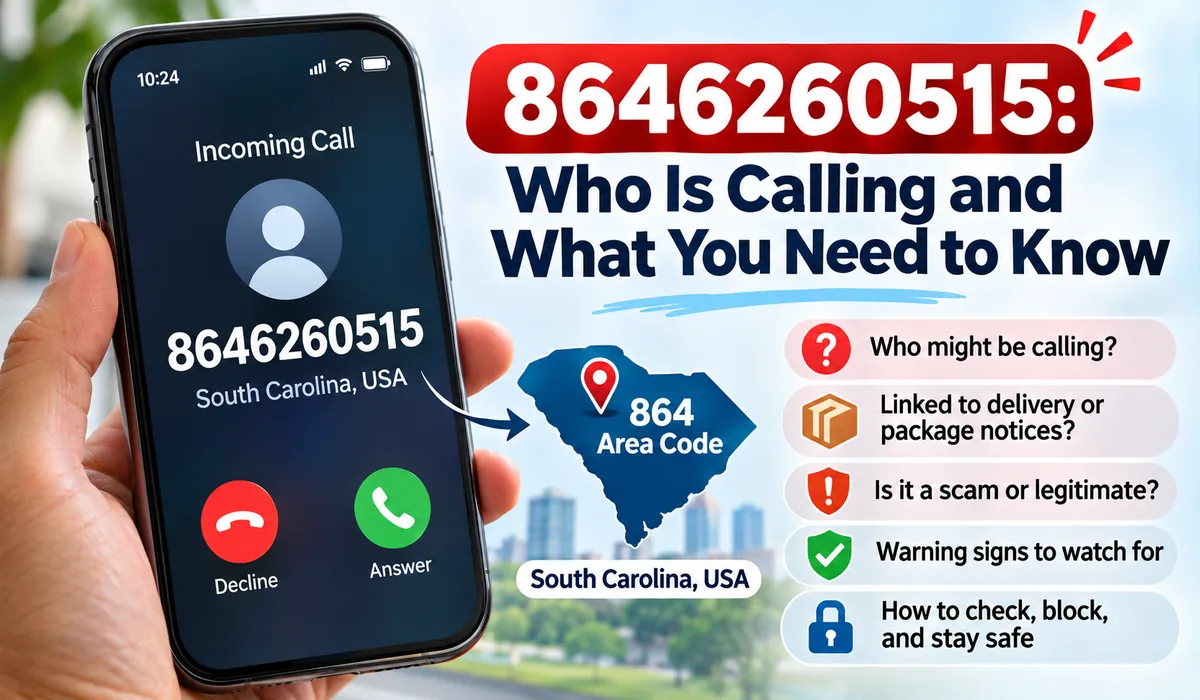
An unknown phone number can leave you wondering who wants to reach you. If 8646260515 appeared on your screen, you may be asking whether it belongs to a business, an ordinary person, or an unwanted caller. A number alone rarely provides a complete answer.
The number uses a U.S. area code assigned to South Carolina. However, the current caller’s identity has not been independently confirmed. Even a familiar-looking number may not show who actually made the call.
This guide explains the available clues, possible reasons for contact, and sensible ways to respond. It also covers delivery notices, spoofing, and advice for U.S. and U.K. readers.
What Is 8646260515?
8646260515 is a ten-digit telephone number. It may appear as (864) 626-0515. Its format fits the North American Numbering Plan, used in the United States and nearby regions.
Looking up a number may reveal an area, a telephone provider, or comments from previous recipients. These details are useful clues, but they may be incomplete. Numbers change users, and public directory entries can become outdated.
No independently confirmed current owner has been established for this number in the material reviewed here. That does not prove it is fake or dangerous. The clearest description is an unverified number whose actual caller must be checked separately.
Where Does the 864 Area Code Come From?
The 864 area code serves upstate South Carolina, including Greenville, Spartanburg, Anderson, and surrounding communities. It is a regular geographic area code, not one reserved for government offices or emergency services.
Assignment records associate the 626 prefix with a provider. That kind of record describes an assigned number block. It does not identify the current user or confirm that a particular call originated there.
A call from another state may be entirely ordinary. A business or relative might be contacting you. Equally, an area code cannot establish trustworthiness, because the displayed calling number can be changed or imitated.
Who Might Be Behind This Phone Number?
An unrecognized call may come from a person, a company, an automated appointment service, or someone who dialed incorrectly. Without a reliable message or verified name, selecting one explanation would be a guess.
Businesses sometimes use internet phone systems that allow staff to call from different places. The number therefore cannot establish the caller’s location.
Another possibility is caller ID spoofing. This means a different number is made to appear on your screen. Fraudsters may use spoofing to seem local or trustworthy, although altered caller information is not always malicious.
Instead of trusting a number lookup alone, consider a clear voicemail, a known business relationship, or confirmation through an established customer service channel. Avoid treating anonymous claims about the owner’s identity as verified facts.
Why Are You Receiving Unexpected Calls?
Some unexpected calls are harmless. A person might have dialed the wrong number, or a business may be following up on a previous request. A missed call without voicemail provides little context.
Repeated calls can come from appointment reminders, sales teams, or automated dialing systems. Unwanted callers may also retry frequently. The pattern becomes more meaningful when you know what the person says or asks you to do.
Pay attention if a caller describes an urgent account issue, unpaid bill, missed delivery, or legal threat. Such claims can be genuine, but an unexpected demand should never be accepted without independent checks.
If you do not recognize the number, review recent orders, appointments, and requests for callbacks. If nothing matches, consider blocking repeated calls.
Is 8646260515 a Scam or a Legitimate Number?
There is not enough verified evidence to describe every call showing 8646260515 as fraudulent. Online discussion can highlight concerns, but comments alone do not establish who controls a number or what happened during every call.
Some websites connect the number with suspicious calls or delivery notices. They do not identify a confirmed operator. They warrant caution, not an accusation.
What the caller requests matters more than the digits. Demands for passwords, one-time security codes, gift cards, or urgent transfers are serious warning signs. A calm claim to represent a company still needs independent verification.
You do not need a final verdict on the number itself. If something sounds wrong, end the conversation and contact the claimed organization using details from your account, an official app, or its verified website.
Delivery Postcards and Package Notices
One online article has associated this number with postcards about packages waiting for delivery. That specific connection remains unverified. Still, fake delivery messages are a real problem, and understanding their methods can help you recognize suspicious notices.
A postcard might claim a parcel is on hold or that a delivery attempt failed. Watch for missing carrier details, no usable tracking information, or urgent instructions to call an unfamiliar number. A printed card is not proof of authenticity.
A misleading notice may lead to requests for delivery fees or personal information. Genuine couriers may also request action, so check unexpected notices.
If you are expecting a package, open the retailer’s account or courier’s official tracking service yourself. Check the tracking number and delivery status. Do not rely solely on the phone number printed on an unexplained notice.
Warning Signs of a Suspicious Phone Call
Suspicious calls often involve a convincing story. Someone may claim to work for a bank, shipping company, government office, or technical support team. Knowing your name or address does not prove the claim is real.
Pressure is another warning sign. A caller might threaten account closure, promise a prize, or demand payment before you have time to think. You should be free to verify the claim.
Be especially cautious about requests for:
- Passwords, account PINs, or one-time verification codes.
- Gift cards, cryptocurrency, or unusual transfers.
- Remote access to your phone or computer.
Not every unexpected call is a scam. However, refusal to identify the organization, hostility when questioned, or demands for secrecy justify ending the call. Politeness never requires sharing sensitive information.
How to Check an Unknown Caller Safely
First, review your own records. Did you order something, book an appointment, or ask a company to call? A real reason for contact may appear in an existing email, account message, or receipt.
You may search the complete number in different formats and compare any public comments. Treat caller-report websites as clues, not proof. Reviews can be mistaken, outdated, or based on a spoofed number.
When someone claims to represent an organization, end the call and find its contact details independently. Use your bank card, statement, official app, or an established company website. Ask whether anyone attempted to reach you.
A voicemail can provide context, but a recorded name or official-sounding greeting is not enough. Keep the verification process separate from the incoming call, especially when money, identity documents, or account access are involved.
Should You Answer or Call Back?
You do not have to answer an unfamiliar number. Letting it reach voicemail is sensible when you are not expecting contact. A legitimate caller often leaves a message explaining why they need to speak with you.
Calling back without context may reach someone who did not place the call if the displayed number was spoofed. Calls to certain unfamiliar international numbers may also carry charges. There is no reason to return every missed call immediately.
If you answer, ask who is calling and why without confirming private details. You can end the conversation and check the explanation later. Simply saying hello does not normally give someone access to your accounts.
For unexpected robocalls, hanging up is often better than pressing a button to request removal. You can review a message afterward and decide whether the contact warrants a report or a block.
What If You Already Spoke to the Caller?
Think about what actually happened. Listening to a message is very different from sharing a password, revealing card details, or sending money. The response should match what information or access you gave away.
If you shared a password or verification code, secure the affected account through its official service. Change exposed passwords, check recent activity, and enable stronger sign-in protection. Contact your bank promptly if payment information was disclosed.
If you transferred money, speak with the payment provider about recovery options. Save the caller’s messages, dates, and transaction details. These records may support a report.
If you only answered and hung up, major corrective action is usually unnecessary. Remain alert for further suspicious contact, avoid sharing anything additional, and block the number if it continues to disturb you.
How to Block and Report Unwanted Calls
On an iPhone, open the Phone app’s call history, view the number’s details, and select the block option. You may also enable call screening or filtering features, although they can affect calls from people you genuinely need to hear from.
On many Android phones, open recent calls in the Phone app and choose Block or Report spam. Menus vary across Google, Samsung, and other devices. Spam filters cannot catch every unwanted call.
In the United States, suspected scams can be reported to the Federal Trade Commission. The Federal Communications Commission accepts complaints about unwanted calls and caller ID spoofing. The National Do Not Call Registry may reduce lawful sales calls, but criminals can ignore it.
In England, Wales, and Northern Ireland, the Report Fraud service handles fraud reports. People in Scotland can contact Police Scotland. U.K. phone providers can advise about nuisance calls, and suspicious texts can often be forwarded to 7726.
Everyday Ways to Protect Your Privacy
Limit where you publish your phone number. Public posts, forgotten accounts, and online forms can make contact details easier to collect. Check privacy options when signing up for services or sharing information publicly.
Do not trust a stranger just because they know your name, address, or recent purchase. Such facts may come from ordinary records or exposed information. Familiar details are not proof that a caller represents a trusted organization.
Use strong, unique passwords and enable account notifications where available. This helps you spot unusual activity.
Discuss common scams with relatives, especially those less familiar with spoofed numbers and fake delivery notices. Agree to verify unexpected requests for money or security codes. A simple family rule can prevent rushed decisions.
Final Thoughts
8646260515 looks like a standard U.S. telephone number, and its area code belongs to South Carolina. Those facts do not establish the current owner, the caller’s actual location, or their intentions. A confident accusation would go beyond the available evidence.
The practical approach is to check rather than guess. Avoid unexplained callbacks, verify delivery notices or company claims independently, and never reveal sensitive information to an unconfirmed caller. Repeated unwanted contact can be blocked or reported.
You do not have to solve the mystery behind every missed call. Use trusted contact methods and limit what you share.
Frequently Asked Questions (FAQs)
Who owns 8646260515?
A confirmed current owner has not been established from reliable public information reviewed here. Directory entries and online comments may provide clues, but they cannot prove who made a particular call. Verify any claimed identity independently.
Is 8646260515 a scam number?
Some websites describe suspicious activity, but that does not prove every call displaying this number is fraudulent. Treat requests for money, private details, or security codes cautiously, and check the claimed organization through trusted channels.
Is the number really from South Carolina?
The 864 area code is assigned to upstate South Carolina. However, caller ID can be spoofed, and internet calling services may be used from elsewhere. The displayed number does not confirm someone’s physical location.
Why does 8646260515 keep calling me?
The reason is unknown without a message or verified caller details. Possibilities include an incorrect number, legitimate follow-up, automated outreach, or unwanted marketing. If repeated calls have no clear purpose, consider blocking them.
Should I call 8646260515 back?
An unexplained missed call does not require a callback. If someone claims to represent a business, contact that business using independently verified details instead. This avoids relying on a possibly spoofed caller ID.
What if I shared personal information?
Protect the affected accounts and contact your bank if you disclosed payment details or sent money. Change exposed passwords, review unusual activity, preserve messages, and report suspected fraud to the appropriate service in your country.