

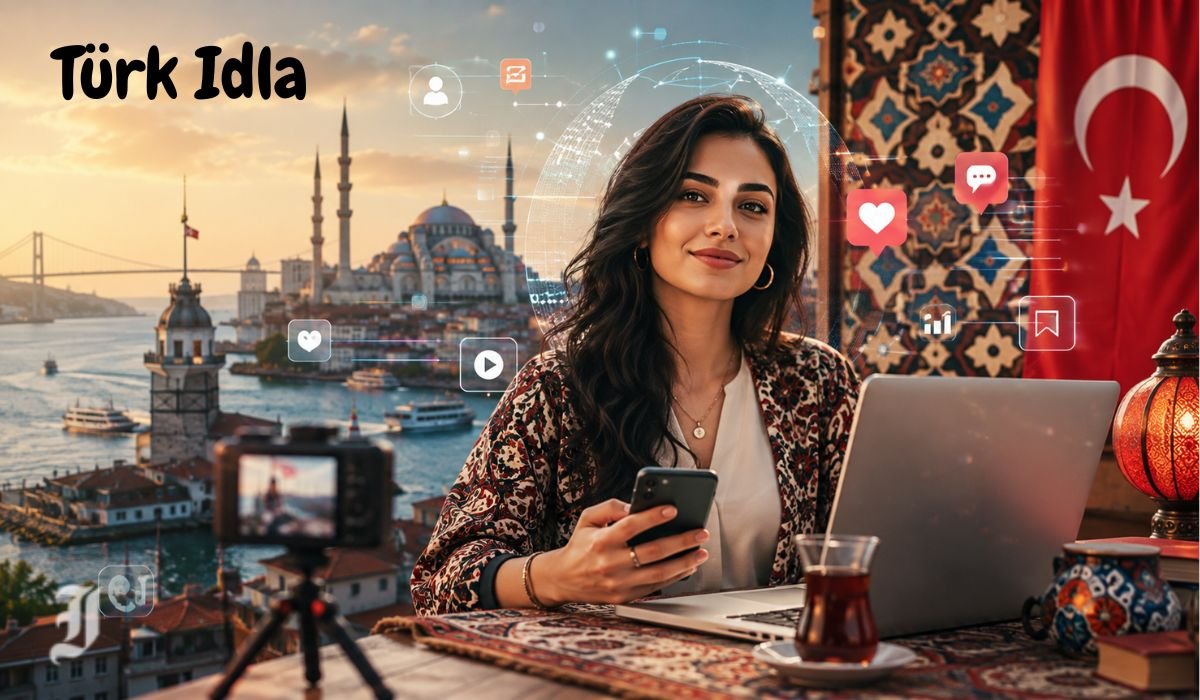
Türk Idla is an unusual internet phrase: it attracts searches before offering a settled definition. Readers may encounter it in discussions about Turkish culture, social media, or digital creators, yet it is not widely recognized as a dictionary term, historic tradition, or official movement. Its meaning has developed through online interpretation and growing interest in Turkish digital life. The clearest way to understand it is through three connected areas—language, culture, and online trends—which reveal how an uncertain phrase can reflect modern identity, creative influence, and changing ideas about fame.
Language: What Does Türk Idla Mean?
Türk Idla is best understood as an emerging online label connected with Turkish digital creators, cultural identity, and social-media influence. Some writers use it for creators who build audiences through TikTok, Instagram, and YouTube. Others apply it to content combining Turkish language, humor, music, fashion, food, or traditions with global formats. No authoritative institution has established a formal definition, so the phrase should not be presented as a fixed cultural category. It currently suggests an internet-based form of Turkish visibility shaped by creativity and direct audience engagement.
The Meaning of “Türk”
The first word is clear. “Türk” refers to Turkish identity and can describe a person, nationality, language, or cultural connection related to Turkey. Online, it may signal national belonging, Turkish-language content, shared customs, or a recognizable cultural viewpoint. Adding “Türk” to a digital label also helps signal the intended audience and connects the phrase with searches for Turkish influencers, youth culture, entertainment, and social trends. It therefore works as both a cultural marker and a discovery signal.
The Uncertain Meaning of “Idla”
“Idla” is the difficult part. It has no widely documented meaning in standard modern Turkish, and reliable linguistic sources do not identify it as a traditional word. Some online explanations describe it as a stylized variation of “idol,” creating an idea similar to “Turkish idol.” That reading suits articles about influencers, but it remains an interpretation rather than a confirmed translation. Idla could also be a coined expression, username-style construction, or acronym. The safest explanation is that it gained meaning through internet usage rather than established language rules.
Spelling Variations and Turkish Letter Rules
The phrase appears as Türk Idla, Türk İdla, Turk Idla, TürkIdla, and Türk IDLA. Turkish treats dotted “İ/i” and dotless “I/ı” as separate letters, while English keyboards and inconsistent capitalization often create variations. These spellings usually point to the same uncertain concept. For SEO, writers can use “Türk Idla” while mentioning related forms naturally. The lack of a standard spelling is another sign that the term is still developing rather than established in formal Turkish usage.
Culture: How the Idea Developed
No verified founder, launch date, manifesto, or organization has been found for Türk Idla. Its public story appears to have grown through search-driven articles rather than a documented community. Early discussions treated it as a possible coined phrase or digital identity; later pages described it more confidently as a creator movement, often without examples of people using the name themselves. This progression is common online: a vague keyword receives an explanation, repetition makes it look established, and interpretation gradually begins to resemble fact.
A Biography of an Online Term
Viewed in biography-style terms, Türk Idla has a short but revealing life story. Its “birth” appears digital, its “identity” remains unsettled, and its “reputation” has been shaped by publishers trying to define it. The phrase moved from uncertainty toward a narrative about Turkish creators, independent fame, and cultural expression. It could become a community label, remain a niche search term, develop into a brand, or disappear as internet language changes. Its unfinished biography prevents readers from confusing a developing interpretation with historical fact.
Why Definitions Differ So Widely
Online definitions of Türk Idla often contradict one another. Some connect it with influencers and digital fame; others describe cultural preservation, music, technology, food, or older traditions. These conflicts show why source quality matters. A dependable definition should be supported by consistent usage, identifiable communities, original statements, or linguistic evidence. Without those elements, a claim is better treated as speculation. The strongest shared theme is the relationship between Turkish identity and digital creator culture, even though the label remains informal.
Turkish Identity in Global Formats
The wider cultural phenomenon behind Türk Idla is easy to recognize. Turkish creators frequently use global content formats while keeping local identity visible. Comedy clips may rely on Turkish family humor, fashion videos may feature regional or urban styles, and food content may introduce traditional dishes to international viewers. Music, street interviews, gaming, beauty, travel, and educational videos can all carry Turkish language and cultural references. This mix allows creators to join worldwide trends without becoming culturally anonymous. In that sense, Türk Idla can serve as a loose description of the meeting point between local heritage, modern self-presentation, and international digital culture.
Online Trends: Platforms, Influence, and Fame
TikTok, Instagram, and YouTube provide the environment in which Türk Idla makes sense. TikTok favors quick storytelling, music, comedy, and viral participation. Instagram supports visual identity, fashion, lifestyle content, food, and brand partnerships. YouTube gives creators room for interviews, gaming, documentaries, music, and cultural explanation. A creator may gain attention through one short clip and then build an audience across several platforms. Unlike traditional celebrities, digital personalities can publish their own work and communicate directly with followers without depending on television networks or major entertainment companies.
Key Characteristics Associated With Türk Idla
Although Türk Idla has no official membership rules, discussions of the term repeatedly emphasize several qualities:
• a visible connection to Turkish culture;
• independent content creation;
• direct interaction with followers;
• use of Turkish language, humor, music, fashion, or traditions;
• a recognizable personal brand;
• participation in international trends;
• consistent publishing across social platforms; and
• the ability to turn attention into creative or commercial opportunities.
These features do not prove that Türk Idla is a formal movement. They simply explain why the phrase has become connected with a recognizable type of modern Turkish creator.
Authenticity and Digital Identity
Digital creators often appear more accessible than traditional celebrities because audiences see daily routines, opinions, mistakes, family moments, and behind-the-scenes work. That sense of closeness can make a creator feel authentic, even when the public image is carefully managed. In the context of Türk Idla, authenticity usually means presenting a personality that feels culturally familiar and emotionally believable. Personal branding adds consistency through visuals, topics, language, and values. Successful creators often balance polish with relatability: they are distinctive enough to remember but familiar enough to trust. Turkish identity can become part of that brand without being reduced to a costume or marketing device.
Opportunities and Pressures
Creator culture offers opportunities through advertising, sponsorships, affiliate marketing, subscriptions, merchandise, music distribution, events, and independent businesses. It can also increase the global visibility of Turkish humor, food, fashion, language, and art. However, online fame carries real pressure. Creators face changing algorithms, constant comparison, harassment, privacy risks, misinformation, and demands for continuous content. Viewers may feel inspired, but they may also compare their appearance, income, or lifestyle with highly edited online images. A balanced explanation of Türk Idla should recognize both sides: digital platforms can support creativity and cultural connection while also turning identity and attention into commercial products.
Is Türk Idla a Real Movement?
There is not enough evidence to describe Türk Idla as an official movement. No broadly recognized founder, central organization, membership system, manifesto, or consistent self-identifying community has been established. A more accurate description is an evolving internet label used to discuss Turkish digital identity and creator culture. Informal labels can still matter, and many eventually gain clearer meanings when communities adopt them. The important distinction is between a term defined by outside articles and one claimed by participants themselves. Until Turkish creators or cultural institutions use Türk Idla consistently, responsible writing should present it as an emerging interpretation, not a proven organization or historic tradition.
Final Thoughts
Türk Idla matters because it sits at the intersection of language, culture, and online change. “Türk” provides a clear cultural connection, while “Idla” remains uncertain and may be a stylized internet invention associated with the idea of an idol. The surrounding phenomenon, however, is real: Turkish creators are shaping digital culture through comedy, music, fashion, gaming, food, education, and personal storytelling. They combine local identity with global platforms and build audiences without relying entirely on traditional media. For now, Türk Idla is best understood as a developing digital label whose meaning may become clearer if real communities begin using it consistently.
Frequently Asked Questions
1. What does Türk Idla mean?
Türk Idla is an informal online phrase associated with Turkish digital creators, cultural identity, and social-media influence. It does not yet have one universally accepted definition.
2. Is Türk Idla a real Turkish word?
It is not recognized as a standard modern Turkish expression. “Türk” has a clear meaning, but the origin and definition of “Idla” remain uncertain.
3. Does Idla mean “idol”?
Some websites interpret Idla as a stylized version of “idol.” That explanation fits the creator-culture context, but it has not been linguistically confirmed.
4. Is Türk Idla an official movement?
No verified organization, founder, manifesto, or membership structure has been identified. It is more accurately described as an emerging internet label.
5. Where did Türk Idla originate?
Its exact origin is unknown. The phrase appears to have gained visibility through online articles and search interest rather than a documented cultural organization.
6. Why are there different spellings?
Forms such as Türk İdla and Turk Idla result from Turkish letter rules, English keyboards, capitalization differences, and inconsistent online publishing.
7. Which platforms are connected with Türk Idla?
TikTok, Instagram, and YouTube are most closely associated with the idea because they support personal branding, creator culture, and cultural storytelling.
8. Is Türk Idla connected with Turkish history?
No reliable evidence establishes it as an ancient, Ottoman, or traditional Turkish expression. Historical origin claims should be treated cautiously.
9. Why are people searching for Türk Idla?
The phrase combines cultural identity with popular subjects such as influencers, digital fame, youth culture, and social-media trends, naturally creating curiosity.
10. Could its meaning change?
Yes. Internet terms often develop when communities adopt them consistently, so Türk Idla may gain a clearer definition in the future.